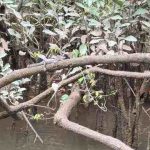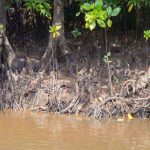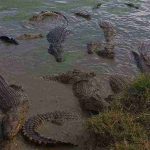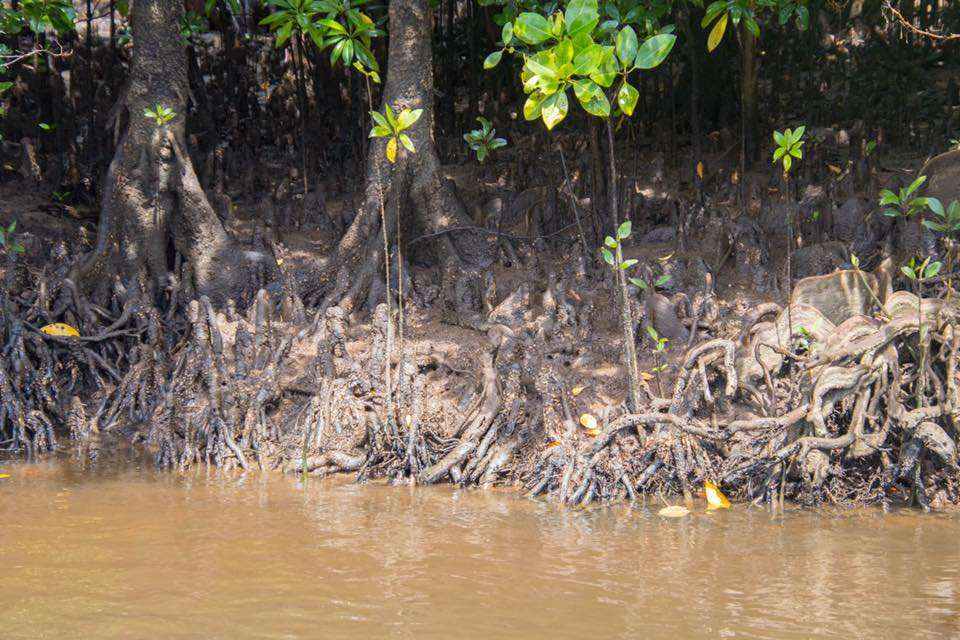

In the tangled heart of a coastal mangrove forest, where the boundary between land and water blurs into a labyrinth of mud, roots, and shadows, nature plays one of its greatest tricks. At first glance, the image shows a classic scene: gnarled tree trunks rising from nutrient-rich mud, prop roots twisting like ancient fingers into the murky brown water, and vibrant green leaves catching the sunlight. But look closer — much closer — and you’ll discover something far more thrilling than just another scenic wetland photograph.
There, nestled among the middle tree roots in the center of the frame, a crocodile lies perfectly still, its body merging seamlessly with the dark, wet environment. Its rough, textured skin mimics the bark and mud of the mangrove roots, while its elongated snout and watchful eyes remain nearly invisible unless you know exactly where to look. This master of disguise demonstrates why these reptiles have survived for millions of years.
Mangroves are among the most productive and challenging ecosystems on Earth. Found in tropical and subtropical regions across Asia, Africa, Australia, and the Americas, these forests act as vital nurseries for marine life, buffers against storms, and carbon sinks. In places like India’s Sundarbans — home to the largest mangrove forest in the world — saltwater crocodiles (Crocodylus porosus) reign as apex predators. These massive reptiles can grow up to 7 meters (23 feet) long and are known for their incredible ability to remain motionless for hours, waiting for prey such as fish, birds, monkeys, or even deer that venture too close to the water’s edge.
The crocodile in this image exemplifies crypsis — the biological strategy of blending into one’s surroundings to avoid detection by both prey and potential threats. Its coloration, from olive-brown to muddy gray, matches the silt-laden water and decaying organic matter. The irregular patterns on its back echo the shadows cast by overlapping roots and the dappled light filtering through the canopy. Even its breathing is subtle; only the slightest movement of its nostrils might betray its presence.
For wildlife photographers and nature enthusiasts, spotting such hidden animals is both a challenge and a reward. It requires patience, sharp observation, and knowledge of animal behavior. In this particular photograph, the crocodile’s position — right at the central cluster of exposed roots where water meets land — is strategic. It can quickly slip into deeper water if disturbed or launch a lightning-fast ambush toward the shallows.
This image serves as a powerful reminder of the delicate balance in mangrove ecosystems. These forests face threats from climate change, rising sea levels, deforestation for aquaculture, and coastal development. Protecting them is crucial not only for the survival of species like the crocodile but also for human communities that rely on mangroves for fisheries, timber, and natural coastal defense.
Next time you explore a mangrove boardwalk or view photos from expeditions in places like the Andamans, Florida Everglades, or Southeast Asian deltas, take a moment to scan the roots carefully. You might just lock eyes with one of nature’s ultimate ambush artists.
Answer: The crocodile is hidden at the middle tree root in the center of the image. Its body aligns with the dark, tangled roots just above the waterline, with its head and back blending into the shadows and textures.
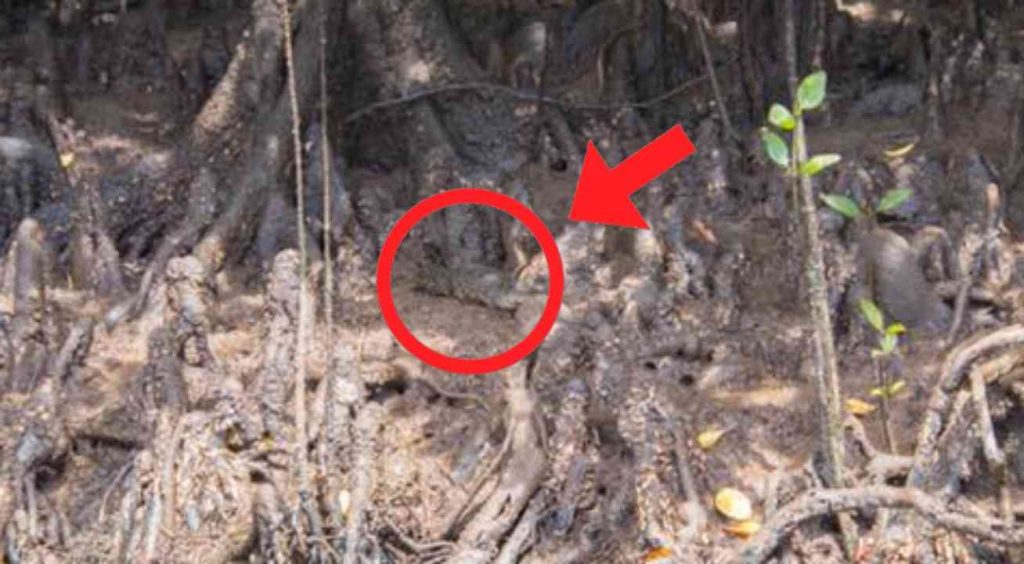
Once you see it, you can’t unsee it — a classic example of expert natural camouflage.