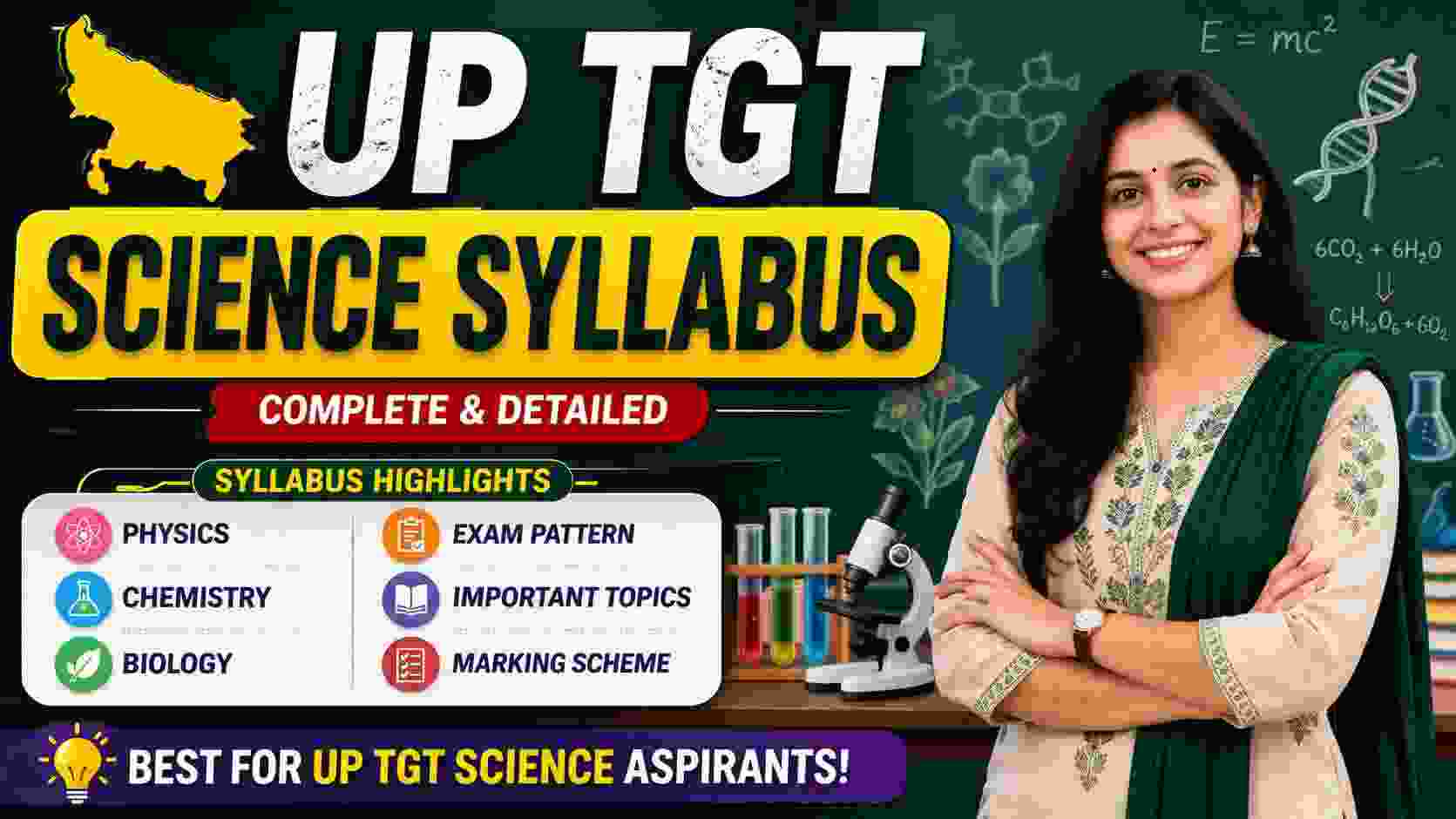

Aspiring science teachers in Uttar Pradesh have a golden opportunity with the UP TGT Science recruitment 2026. The Trained Graduate Teacher (TGT) Science post is a prestigious role in government secondary schools, allowing you to teach Physics, Chemistry, and Biology to classes 9 and 10 students. This position offers job security, attractive salary scales under the 7th Pay Commission, and excellent career growth in the Uttar Pradesh education department.
The minimum qualification for UP TGT Science is a Bachelor’s degree in Science (B.Sc with Physics, Chemistry, Mathematics/Biology combination) with at least 50% marks, along with a B.Ed or equivalent teacher training qualification from an NCTE-recognized institution. Candidates must also have qualified the UPTET Paper 2 (Science/Maths category). The recruitment is conducted by the Uttar Pradesh Secondary Education Service Selection Board (UPSESSB), and the selection is primarily based on the written examination. With thousands of vacancies expected across various posts, this is the perfect time for dedicated educators to prepare seriously and secure a stable government teaching job.
Exam Pattern of UP TGT Science
The UP TGT Science exam pattern 2026 is straightforward and candidate-friendly. The written test is conducted offline in OMR sheet format and consists of objective-type multiple-choice questions only. There is no negative marking, which allows you to attempt all questions without fear of penalty.
The exam is held for a total of 500 marks with 125 questions, each carrying 4 marks. The duration of the paper is 2 hours. The entire paper focuses on the concerned subject (Science) along with some general sections, ensuring a balanced assessment of subject knowledge and teaching aptitude.
| Particulars | Details |
|---|---|
| Mode of Exam | Offline (OMR-based) |
| Total Questions | 125 MCQs |
| Marks per Question | 4 Marks |
| Total Marks | 500 Marks |
| Exam Duration | 2 Hours |
| Negative Marking | No Negative Marking |
| Question Type | Objective (MCQ) |
The paper is bilingual (Hindi and English). This pattern tests your conceptual clarity in Science subjects while keeping the focus on topics relevant to secondary school teaching. With no negative marking and ample time, smart preparation and practice of previous year papers can help you score high.
Qualifications for TGT Science
To apply for UP TGT Science posts, candidates must fulfill the following minimum qualifications:
- Graduation (B.Sc) in Science stream with Physics, Chemistry, and Biology/Mathematics as subjects, securing at least 50% marks in aggregate.
- B.Ed or equivalent teacher training qualification from an NCTE-recognized institution.
- Qualified UPTET Paper 2 in the Science/Mathematics category.
- Age limit: 21 to 40 years as on the notification date (relaxation applicable for reserved categories as per UP government rules).
- Proficiency in Hindi and English language.
- Indian citizenship and knowledge of local education context preferred.
These requirements ensure that only well-qualified and trained candidates enter the teaching profession.
Download TGT Science Syllabus PDF
Here is a quick and easy table to download the latest UP TGT Science Syllabus 2026 PDF for various posts:
| Subject | Download Button |
|---|---|
| UP TGT Science Complete Syllabus (English) | Download PDF |
| UP TGT Science Complete Syllabus (Hindi) | Download PDF |
| UP TGT Science Exam Pattern & Guidelines | Download PDF |
Candidates are advised to visit the official UPSESSB website regularly for the most updated notification and syllabus links.
UP TGT Science Complete Syllabus
(a) Physics
Units and Measurements
Fundamental units and derived units in the S.I. system, conversion of units from one system to another, verification of equations by dimensional method, scalar and vector quantities.
Motion and Force
Relative motion, Newton’s principle of relative motion, displacement, speed and velocity, linear motion, particle motion and their relation, uniform and uniformly accelerated motion along a straight line, law of inertia, force-acceleration, equations of motion, potential and kinetic energy, linear momentum and angular momentum, conservation of energy and momentum, conversion of potential and kinetic energy into each other, gravitational and inertial mass, Newton’s laws of motion, action and reaction, rotational motion, couple, torque, centre of mass and centre of mass force, Coriolis force, Newton’s law of gravitation, Kepler’s laws, motion of earth, satellite motion, geostationary satellite, escape velocity, variation in ‘g’ with height, depth, latitude and longitude, simple harmonic motion and its equation, time period of simple pendulum, restoring and non-restoring force, damping force, factors affecting time period, accelerated and non-accelerated frames, weightlessness.
Heat
Concept of heat and temperature, calculation of temperature conversion from one scale to another, absolute scale of temperature, thermal expansion, expansion in solids – linear, superficial and cubical expansion and their relation with simple linear expansion, anomalous expansion of water, thermal conductivity, steady state, temperature gradient, good and bad conductors, convection of heat, convection currents, natural and forced convection, radiation of heat, emissivity, absorptivity, laws of radiation, black body, Stefan-Boltzmann law of radiation, Wien’s displacement law, radiation as electromagnetic waves, wave and energy density, Newton’s law of cooling, radiation correction, Stefan’s law, heat capacity, water equivalent of heat, specific heat of solids, liquids and gases, Mayer’s relation, ratio of specific heats for monoatomic, diatomic and triatomic gases, measurement of heat, calorimeter, change of state, latent heat, hygrometer, mechanical equivalent of heat, first law of thermodynamics.
Light
Spherical mirrors and lenses, refractive index, formation of image, human eye, defects of vision, myopia, hypermetropia, minimum distance of distinct vision, basic concepts of interference, diffraction and polarisation.
Electricity
Cell, primary and secondary cell, internal resistance, electromotive force, electronic and conduction currents, drift velocity, free path, relaxation time, Ohm’s law, resistance in series and parallel combinations, measurement of current and potential difference, conversion of galvanometer into ammeter and voltmeter, measurement of resistance, Wheatstone bridge, post office box, meter bridge, transformer in A.C. and D.C. currents, choke coil and generator.
Modern Physics
Structure of atom, vector model of atom, Bohr’s theory of hydrogen atom, basic concept of atomic energy, fusion, fission, production of X-rays, photoelectric effect, basic concepts of C.N. and C.R.
(b) Chemistry
Matter
Nature and behaviour of matter, types of matter, elements and their classification (metals and non-metals), compounds and their mixtures.
Laws of Chemical Combination
Law of conservation of mass, law of definite proportions, law of multiple proportions, Gay-Lussac’s law of gaseous volumes, Avogadro’s law of molecular constitution.
Structure of Matter
Dalton’s atomic theory, atom, molecule and their characteristics.
Atomic Structure
Discovery of electron, proton and neutron. Rutherford’s alpha particle scattering experiment and discovery of nucleus.
Rutherford, Bohr and Sommerfeld’s atomic models. Quantum numbers, modern atomic theory.
de Broglie equation, Heisenberg’s uncertainty principle, shapes of s, p and d orbitals, Aufbau principle, Hund’s rule and Pauli’s exclusion principle for electronic configuration of elements.
Radioactivity
Discovery of radioactivity, radioactive rays and their properties, half-life and average life, laws of radioactive decay, nuclear fission and fusion, artificial radioactivity. Isotopes, isobars and isotones.
Chemical Bonding
Basic concept of valency, electronic theory, octet rule, exceptions to octet rule, electrovalent, covalent and coordinate bonds. Characteristics of ionic, covalent and coordinate compounds. Polarisation and Fajans’ rule. Inert pair effect, valence bond theory of covalent bond (for hydrogen molecule), hybridisation and shapes of sp, sp² and sp³ hybrid orbitals.
Chemical Reactions
Symbols/notation, ions and formulae. Representation of chemical reactions by chemical equations. Physical and chemical changes and their difference. Types of chemical reactions – displacement, addition, decomposition, dissociation, double decomposition, slow, fast, reversible and irreversible reactions.
Electrochemical Cell
Voltaic cell and its working. Dry cell, lead storage battery, reversible cell, electrode potential, Nernst equation and its applications.
Periodic Classification of Elements
Mendeleev’s periodic classification and its basis, merits and demerits of Mendeleev’s periodic table, modified form of periodic table and its important features, periodic properties of elements (atomic and ionic radii, ionisation potential, electron affinity and electronegativity). Variation of periodic properties in groups and periods. General properties of s and p block elements. Properties of first row transition elements (3d block elements) in the context of their electronic configuration, oxidation states, colour, magnetic properties and formation of complex compounds.
General Organic Chemistry
Inductive, electromeric and mesomeric effects. Hyperconjugation, resonance and their applications, electrophilic and nucleophilic reagents, free radicals, carbocations and carbanions. Hydrogen ion and its effects. Classification of organic compounds and their nomenclature.
Isomerism
Structural and stereoisomerism, concept of mechanism of organic reactions. Mechanism of simple substitution, addition and elimination reactions.
Methods of preparation and properties of the following organic compounds
Alkanes, alkenes, alkynes, alkyl halides, ketones, acids and their derivatives, benzene – its preparation, properties and structure.
पाठ्यक्रम
प्रशिक्षित स्नातक विषय-विज्ञान
(अ) भौतिकी
ईमा एवं मात्रान
एस०आई० पद्धति में मूल मात्रक, व्युत्पन्न मात्रक, इकाईयों का एक पद्धति से दूसरी पद्धति में परिवर्तन, विमीय विधि से समीकरणों का सत्यापन, अदिश एवं सदिश राशियाँ।
गति एवं बल
सापेक्षिक गति, न्यूटन का सापेक्षिक गति का सिद्धान्त, विरथापन, चाल एवं वेग, रेखीय गति, कणीय गति और उनका संबंध, सरल रेखीय गति, स्वतः एवं समान गतियाँ, जड़त्व का सिद्धान्त, बल-त्वरण, गति के समीकरण, स्थितिज एवं गतिज ऊर्जा, रैखिक संवेग एवं कोणीय संवेग, ऊर्जा एवं संवेग का संरक्षण, स्थितिज एवं गतिज ऊर्जा का एक दूसरे में परिवर्तन, गुरुत्वीय एवं जड़त्वीय द्रव्यमान, न्यूटन के गति के नियम, क्रिया एवं प्रतिक्रिया, घूर्णन गति, बल-युग्म, ध्रुवण बल, अंगकेन्द्रिय एवं अंगकेन्द्रिय बल, केशिरिलिस बल, न्यूटन गुरुत्व का नियम, केपलर का नियम, पृथ्वी की गति, उपग्रहीय गति, गुरुत्वीय उपग्रह, पलायन वेग, गुरुत्वीय त्वरण, ऊँचाई, गहराई, गुप्ततह एवं गुप्तति के अनुसार “g” में परिवर्तन, सरल आवर्त गति और उत्पन्न, लघुतम मुण, सरल लोलक, संलक्षित एवं असंरक्षित बल, प्रचान्यमबल, आवर्तकाल की गणना करने वाले कारक, त्वरण एवं बिना त्वरण वाले फ्रेम (क्विष्ट), भारहीनता की अवस्था।
उष्मा
उष्मा एवं तापमान की संकल्पना, एक पैमाने से दूसरे पैमाने में ताप रूपान्तरण का गणन, तापमान का परम गाप, तापीय रागय, ठोसों में प्रसार, रैखिक, बाह्य एवं घनाकार प्रसार और सरल रेखीय बहाव से उनके संबंध, आकमोदायिक ठोस, उष्मा चाल, साम्य अवस्था, ताप प्रवणता, अच्छे एवं बुरे चालक, उष्मा का संवहन, संवहन धारा, मायासी एवं धारतविक प्रसार, उष्मा का विकिरण, उत्सर्जकता, अवशोषकता, किरणक के नियम, कृष्टीका, बीन्स का विकिरण का नियम, किसी कृष्टिका से विकिरण का ल्लांक का नियम, विद्युत चुम्बकीय तरंगों के रूप में विकिरण, वाव एवं ऊर्जा घनत्व, न्यूटन का शीतलन का नियम, विकिरण संशोधन, स्वीफन का नियम, ताप सामर्थ्य, उष्मा का जल तुल्यांक, ठोसों, द्रवों एवं गैसों के विशिष्ट उष्मा, मेंयर का सम्बन्ध, एक गणनुक, द्विगणनुक एवं त्रिगणनुक गैसों के लिए विशिष्ट उष्मा का अनुपात, उष्मा का मापन, कैलोरीमीटर, अवस्था में परिवर्तन, आईना, हाइग्रोमीटर, उष्मा का यान्त्रिक दुरूपांक, उष्मागतिकी का प्रथम नियम।
प्रकाश
गोलीय दर्पण एवं लेन्स, अपवर्तनांक, प्रतिबिम्ब का बनना, मानव की आँख, विपणन, अवर्णता, दूर एवं निकट दृष्टिदोष, स्पष्ट दृश्यता की न्यूनतम दूरी, व्यतिकरण, विवर्तन तथा ध्रुवीकरण की मूल अवधारणाएँ।
विद्युत
सेल, प्राथमिक एवं द्वितीयक सेल, आंतरिक प्रतिरोध, विद्युत वाहक बल, इलेक्ट्रॉनिक एवं चालन धाराएँ, अनुगमन वेग, माध्यमुक्त पथ, क्विग्म काल, ओम का नियम, श्रेणीक्रम एवं समान्तर क्रम में प्रतिरोध, धारा एवं विभवान्तर का मापन, गैल्वेनोमीटर का अमीटर एवं वोल्टमीटर में परिवर्तन, प्रतिरोध का मापन, व्हीटस्टोन सेतु, पोस्ट ऑफिस बॉक्स, मीटर सेतु, ए०सी० एवं डी०सी० धाराओं में मेब ट्रांसफार्मर, चाक मीटर एवं जनरेटर।
आधुनिक भौतिकी
परमाणु की संरचना, परमाणु का वेक्टर मॉडल, बोर का हाइड्रोजन परमाणु सिद्धान्त, परमाणु ऊर्जा की मूल संकल्पना, संलयन, विखण्डन, किरणों का निर्माण, प्रकाश वैद्युत प्रभाव, सीएन०, सीधे, प्रत्येक की मूल संकल्पना।
(ब) रसायन विज्ञान
द्रव्य
प्रकृति एवं व्यवहार, द्रव्य के प्रकार, तत्व एवं उनका वर्गीकरण (धातु एवं अधातु), यौगिक एवं उनके मिश्रण।
रासायनिक संयोग के नियम
स्थिर, अपरिवर्त एवं व्युत्क्रम अनुपात का नियम, गैसों का गैसीय आयतन संबंधी नियम, मिश्रणों का समानुपाती नियम।
पदार्थ की संरचना
डाल्टन का परमाणु सिद्धान्त, परमाणु, अणु एवं उनके अभिलक्षण।
परमाणु संरचना
इलेक्ट्रॉन, प्रोटॉन तथा न्यूट्रॉन की खोज। रदरफोर्ड का अल्फा किरण प्रकीर्णन प्रयोग तथा नाभिक की खोज।
रदरफोर्ड, बोहर एवं समरफील्ड के परमाणु मॉडल। क्वांटम संख्याएँ, आधुनिक परमाणु सिद्धान्त।
डी-ब्रॉगली समीकरण, हाइजेनबर्ग अनिश्चितता सिद्धान्त, s, p तथा d कक्षकों की आकृति, ऑर्फाउ सिद्धान्त, हुण्ड के नियम एवं पाउली के अपवर्जन सिद्धान्त के आधार पर तत्वों का इलेक्ट्रॉनिक विन्यास।
रेडियो सक्रियता
रेडियो सक्रियता की खोज, रेडियो सक्रिय किरणें एवं उनके गुण, अर्द्ध आयु काल एवं औसत आयु, रेडियो सक्रिय क्षय के नियम, नाभिकीय विखण्डन एवं संलयन, कृत्रिम रेडियो सक्रियता। समस्थानिक, समभारिक एवं समन्यूट्रॉनिक।
रसायनिक आबंधन
संयोजकता की मूल अवधारणा, इलेक्ट्रॉनिक सिद्धान्त, अष्टक नियम, अष्टक नियम के अपवाद, वैद्युतसंयोजी, सहसंयोजी एवं उप-सहसंयोजी आबंध। आयनिक, सहसंयोजी एवं उप-सहसंयोजी यौगिक के अभिलक्षण। ध्रुवण एवं फजान नियम। अक्रिय युग्म प्रभाव, सहसंयोजकता का संयोजकता आबंध सिद्धान्त (हाइड्रोजन अणु के लिए), संकरण तथा sp, sp² एवं sp³ संकर कक्षकों की आकृति।
रासायनिक अभिक्रियाएँ
संकेत/प्रतीक, आयन एवं सूत्र। रासायनिक अभिक्रियाओं की रासायनिक समीकरणों द्वारा प्रस्तुति। भौतिक एवं रासायनिक परिवर्तन एवं उनमें अंतर। रासायनिक अभिक्रियाओं के प्रकार – विस्थापन, योगात्मक, वियोजन, अपघटन, द्विअपघटन, मंद दीप, उपभक्षी, उत्काशीक्षी एवं उत्प्रेरित अभिक्रियाएँ।
वैद्युत रासायनिक सेल
वोल्टाइक सेल एवं इसके कार्य की क्रिया विधि। शुष्क सेल, लेड भंडारण बैट्री, उत्काशीक्ष सेल, इलेक्ट्रोड विभव, नर्नस्ट समीकरण एवं इसके अनुप्रयोग।
तत्वों का आवर्त वर्गीकरण
मेण्डलीफ का आवर्ती वर्गीकरण एवं इसका आधार, मेण्डलीफ आवर्त सारणी के गुण एवं दोष, आवर्त सारणी का परिवर्तित रूप एवं इसके महत्वपूर्ण लक्षण, तत्वों के आवर्ती गुण (परमाणु एवं आयनिक त्रिज्याएँ, आयनन विभव, इलेक्ट्रॉन वैधुता तथा विद्युत ऋणात्मकता)। वर्गों एवं आवर्तों में आवर्ती गुणों का परिवर्तन। s तथा p ब्लॉक तत्वों के सामान्य गुण। प्रथम पंक्ति के संक्रमण तत्वों (3d ब्लॉक के तत्वों) के गुणों को इनके इलेक्ट्रॉनिक विकास, ऑक्सीकरण अवस्था, रंग, चुम्बकीय गुण एवं जटिल यौगिकों के निर्माण के संदर्भ में चिंतन।
सामान्य कार्बनिक रसायन
प्रेरणिक, इलेक्ट्रोमेरिक तथा मेसोमेरिक प्रभाव। अतिसंयुग्मन, अनुनाद एवं उनके अनुप्रयोग, इलेक्ट्रॉन स्नेही एवं नाभिक स्नेही अभिकर्मक, मुक्त मूलक, कार्बोकेशन एवं कार्बायनायन। हाइड्रोजन आयनन एवं इसके प्रभाव। कार्बनिक यौगिक का वर्गीकरण एवं उनको नामकरण।
समावयवता
संरचनात्मक एवं त्रिविम समावयवता, कार्बनिक अभिक्रियाओं की क्रियाविधि की अवधारणा। सरल प्रतिस्थापना, योगात्मक एवं निराकरण अभिक्रियाओं की क्रियाविधि।
निम्न कार्बनिक यौगिकों के बनाने की विधियाँ एवं उनके गुण
एल्केन, एल्कीन, एल्काइन, एल्किल हैलाइड, कीटोन, एसिड एवं उनके व्युत्पन्न, बेंजीन, इसका निर्माण, गुण एवं संरचना।
This detailed UP TGT Science syllabus 2026 is designed to test not only your subject knowledge but also your ability to teach Science concepts effectively to secondary school students. Focus on NCERT books from class 9 to 12, as they form the backbone of the examination. Regular practice of mock tests and previous year papers will boost your confidence and accuracy.